

2019 Protecting Underground Utilities by the Numbers
At the beginning of each year, Call Before You Dig analyzes data from the CBYD811 E-Ticket system and DamageAccess incident reporting software. This data highlights trends, identifies usage patterns, and recognizes positive outcomes for damage prevention across Connecticut.
These insights help strengthen 811 education for utilities, contractors, and anyone working around underground facilities. Below are the key statistics and takeaways from 2019.
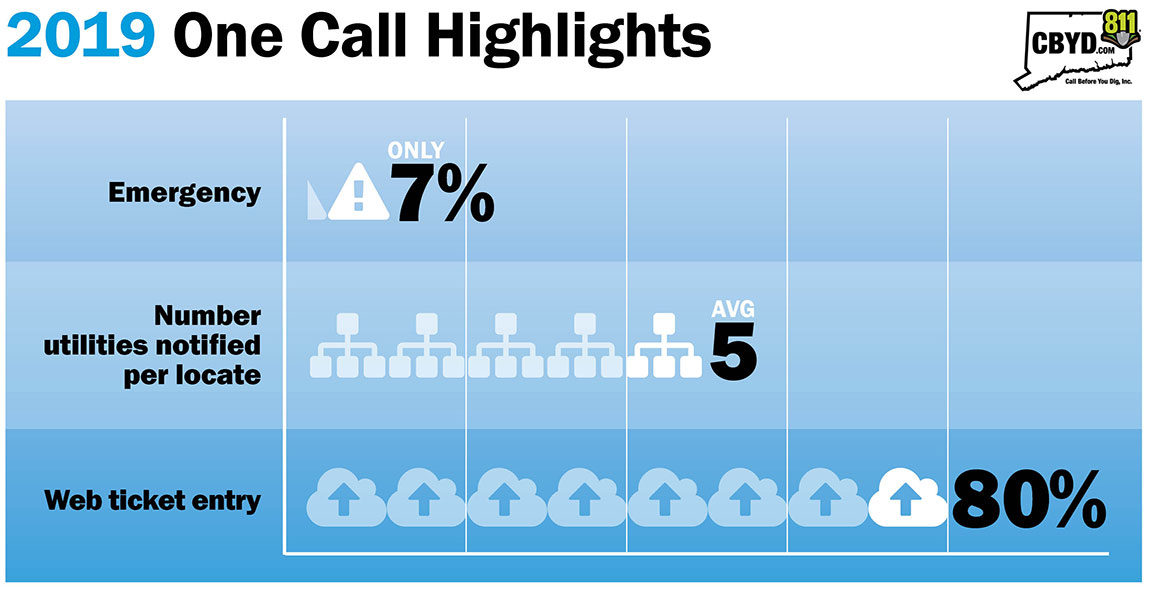
2019 811 Activity by the Numbers
- Total 811 Locate Requests: 234,105
- Routine Requests: 218,119
- Emergency Requests: 15,986
- Web Locate Requests: 187,909
- Phone Requests: 46,186
- New Users Added to CBYD811: 10,000
- Total Utility Notifications: 1,268,001
- Average Utilities Notified Per Request: 5
Key Takeaways for Connecticut Damage Prevention Stakeholders
Increased awareness of 811 and broader use of the CBYD811 system contributed to a reduction in emergency locate requests. In 2019, 93% of inquiries were routine or planned locates, compared to 7% classified as emergency.
Locate request volume remained steady from 2018 to 2019, as did the average number of utilities notified per ticket (five). This ratio has improved since the implementation of enhanced mapping functionality and web-based 811 eTicket entry in 2016, helping streamline notifications and conserve stakeholder resources.
Web and mobile ticket entry continued to grow in popularity, accounting for 80% of locate requests, compared to 20% submitted by phone. Online entry improves site accuracy, enhances safety, and supports statewide damage prevention efforts. CBYD call center staff remain available to assist users during online submission when needed.
Statistics on reported utility damages for Connecticut will be added once finalized. Please check back for updates.
Follow @CBYD811 on Twitter and Facebook, and Call Before You Dig on LinkedIn for the latest news, system updates, and excavation safety tips.